
Irrigation Scheduling for Your Lawn in Florida
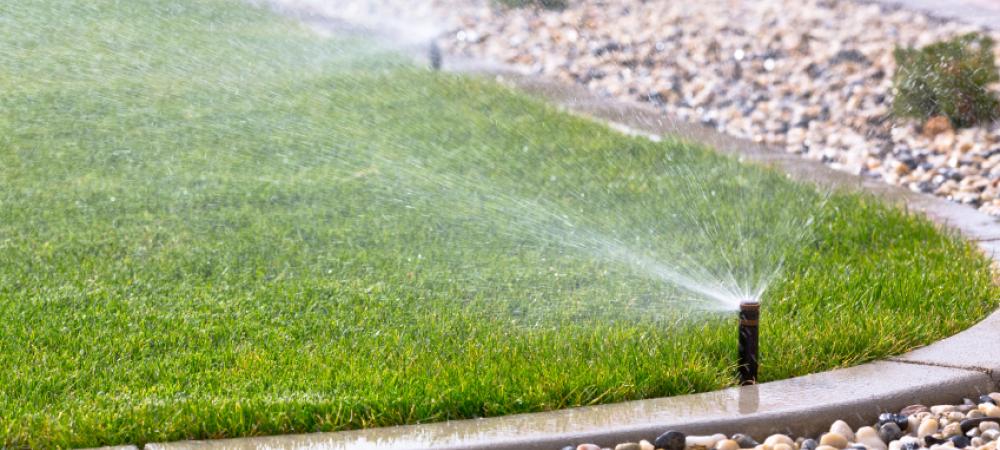
Florida's heat, sandy soils, and unpredictable rain patterns make irrigation one of the most important — and most misunderstood — parts of lawn care.
Water too little and grass shows drought stress within days. Water too often or at the wrong time and you invite fungal disease, waste water, and potentially face fines from your water management district.
Here is what Florida homeowners need to know to water smarter.
How Much Water Does a Florida Lawn Actually Need?
For St. Augustine grass, UF/IFAS recommends applying one-half to three-quarters of an inch of water per irrigation session. That total includes both rainfall and irrigation combined.
- Dry months: Two watering sessions per week is appropriate for most established lawns
- Rainy season (June through September): Natural rainfall often covers the lawn's needs entirely — your system may barely need to run
Bahia and Zoysia grasses are more drought-tolerant and require less frequent watering than St. Augustine. If you are unsure what grass type you have, a lawn care professional can identify it and help calibrate your zone runtimes.
When Is the Best Time to Water?
Water between 4:00 a.m. and 8:00 a.m. — early morning only.
Here is why timing matters:
- Morning watering reduces evaporation that occurs when sprinklers run during peak heat
- Grass blades have time to dry completely before temperatures climb and evening humidity sets in
- Watering at night keeps turf wet for hours, creating ideal conditions for gray leaf spot and other fungal diseases common in Florida's subtropical climate
The takeaway: watering at the wrong time of day can undo everything else you are doing right.
Are There Any Current Watering Restrictions?
The Southwest Florida Water Management District (SWFWMD) declared a Modified Phase III Extreme Water Shortage Order effective April 3, 2026 through July 1, 2026. This affects Pinellas, Hillsborough, and Pasco counties.
What it means for your property:
- Irrigation is restricted to once per week
- Your assigned day is determined by your street address number
- Permitted hours are 12:01 a.m. to 4:00 a.m. or 8:00 p.m. to 11:59 p.m. on your assigned day
- Properties under one acre may use only one of those two windows
Assigned watering days by county:
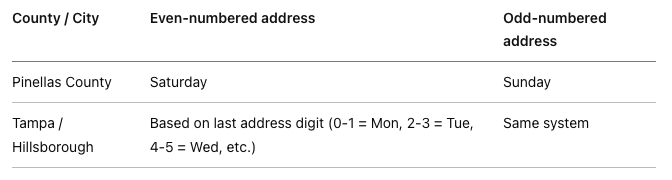
Important: No warnings are being issued after April 17, 2026. Fines in Pinellas County start at $193 per citation and double with each additional violation.
Restrictions can change. You can always confirm your current schedule at WaterMatters.org or with your local utility.
Seasonal Watering Guide: What to Do Month by Month
A set-it-and-forget-it controller is one of the most common irrigation mistakes Florida homeowners make. Your lawn's water needs shift significantly by season.
Spring (March through May)
- Water two to three times per week
- Inspect the system for broken heads, clogged nozzles, and misaligned zones before summer
Summer (June through September)
- Frequent afternoon storms often cover weekly needs — reduce irrigation sessions accordingly
- Rely on a functioning rain sensor to skip cycles after significant rainfall
- Rain sensors are required by Florida law on all automatic systems — if yours is not installed or not working, address it now
Fall (October through November)
- Return to one or two sessions per week as needed
- Watch for drought stress signs rather than watering on a fixed schedule
Winter (December through February)
- St. Augustine enters semi-dormancy below about 55 degrees Fahrenheit
- Many lawns need irrigation once per week or less — some can skip weeks entirely during rainy stretches
How to Tell If You Are Overwatering or Underwatering
Your lawn gives clear signals. Here is what to look for:
Signs of underwatering:
- Grass blades fold or turn blue-gray
- Footprints stay visible after walking across the lawn
- Soil feels dry and brittle an inch below the surface
Signs of overwatering:
- Soil stays soggy for extended periods
- Mushrooms appear across the lawn
- Grass feels spongy underfoot
- Fungal disease outbreaks keep recurring
Overwatering is just as damaging as underwatering. Roots kept near the surface by constant moisture cannot handle heat stress or brief dry spells. A simple rain gauge placed in an open area of your yard takes the guesswork out of tracking how much water your lawn is actually receiving.
Do Rain Sensors Actually Work?
They do — but only if they are functioning.
Rain sensors degrade over time and can fail silently, meaning your system runs through a rainstorm without skipping a cycle. Test yours at least once a year: with the controller in auto mode, press the sensor float manually. The system should pause. If it does not, the sensor needs to be replaced.
Smart irrigation controllers go further, using real-time weather data or evapotranspiration (ET) calculations to adjust schedules based on actual conditions, not just a fixed calendar. They can meaningfully reduce water use while keeping your lawn in better shape than a basic timer.
The Cycle-and-Soak Method
Florida's sandy soils drain quickly. Long, continuous irrigation sessions can cause runoff before water ever reaches the root zone.
Cycle-and-soak splits each zone's runtime into two shorter cycles, separated by a 30 to 60 minute pause:
- First cycle wets the soil surface
- Pause allows water to absorb
- Second cycle drives moisture deeper without generating runoff
This is especially useful on sloped areas or zones with mixed sprinkler head types. If you notice water running off onto driveways or sidewalks during irrigation, cycle-and-soak programming is worth discussing with an irrigation professional.
Have questions about your irrigation schedule or system? Assuregreen Property Services serves homeowners throughout the area. Contact us to learn more about our services or schedule your free quote.